

Few people know that the Mormons or members of The Church of Jesus Christ of Latter-day Saints believe that they are “gods in embryo.”
But, such an idea is clearly contrary to the teachings of the Bible, as well as 2,000 years of orthodox Christian doctrine, which begins with the tenet that there is only one, true God (Jn. 17:3).
When the subject arises in conversation with a Mormon, the Mormon typically evades the subject altogether, as what happened recently when I had a couple of brief exchanges cunning, online Mormon apologists.
A question arose concerning differences between Mormonism and Christianity, and what would set Mormonism apart as satanic.
I answered that Jesus is not the devil’s brother, for starters.
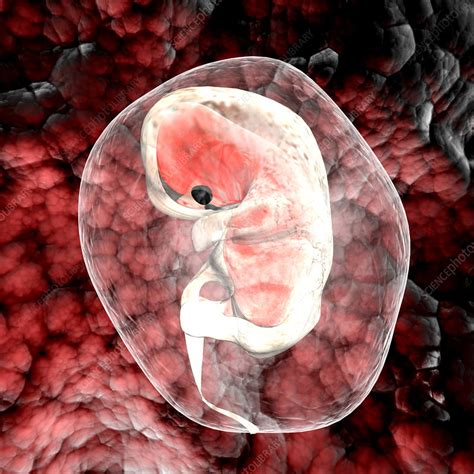
“Man is a god in embryo and has in him the seeds of godhood, and he can, if he will, rise to great heights.” – Spencer W. Kimball
That response was met with all kinds of convoluted nonsense from the Mormons, as they attempted to equate the Creator with the creature, and then eventually all human beings as “brothers” [and sisters] who are “gods in embryo.”
They even tried to proof-text their argument by citing John 10:34, where Jesus asked the Jews, “Is it not written in your Law, ‘I said, you are gods?'”
Well, there you have it: If Jesus called the Jews “gods,” then that must be what they are, which means the Mormons are too.
How could anyone possibly miss such an obvious conclusion?
Such unmitigated Scripture-twisting, though, is another reason why Mormonism is so satanic.
Because when I asked the Mormons who cited the verse “what kind of gods were the Pharisees?,” all of the sudden I was not serious.
How could I have asked such a question?
Now, Jesus was addressing the Jews, of course, so the question could have also been, “what kind of gods were the Jews?” and the point would have been the same.
Jesus was not calling the Jews “gods” in an essential way, but in a metaphorical way.
They possessed the Law of God, yet they were attacking the Son of God for what he did to prove his relationship to God.
The Jews, in other words, were God’s representatives, who were to act in God’s stead as communicators of God’s Law to the people.
Jesus’ allusion is taken straight from Psalm 82:6, or another reference the Mormons love to twist to garner support for the blasphemous idea that they are “gods in embryo.”
But, once again, all that needs to be asked is, What kind of gods were they, that Asaph (the Psalmist) is mentioning?
Because those “gods” judged unjustly and showed impartiality to the wicked (v.2).
They were abusive toward the weak and the fatherless, and failed to maintain the rights of the afflicted and destitute (v. 3).
They did not rescue the weak and the needy, nor did they deliver them from the hand of the wicked (v. 4).
Later, Asaph would write, “I said, “You are gods, sons of the Most High, all of you; nevertheless, like men you will die, and fall like any prince'” (vv. 6-7).
What kind of god dies like a man and falls like a prince?
Clearly, these “gods” were not God in his essence, but God’s representatives who had failed in their appointments to act in God’s stead.
Yet, when the full context of both John 10:34 and Psalm 82:6 are pointed out, the Mormons go ballistic! But, why?
Because their diabolic fantasy of being a god vaporizes into thin air and they know it.
They realize for one short moment that Mormonism is a lie.

“…you have got to learn how to be gods yourselves…the same as all gods have done before you….” – Joseph Smith, Jr.
But, as too many Mormons do, instead of abandoning the blasphemy, they harden their hearts, evade the obvious, and continue the search for a victim that will be less “contentious” for the faith once delivered to the saints (Jude 3), so they can dupe that person into believing the satanic lie of being a “god in embryo” too.
So, the next time you find yourself engaged in a conversation with a Mormon over the differences between his Mormonism and Christianity, just asked him about being a “god in embryo.”
Ask him what kind of god he is right now.
If he defers to Jesus, and him telling the Jews that they were gods, ask the Mormon what kind of gods the Jews were.
In most cases, your conversation will be over in about three exchanges.
But, rest assured, that if you have done your exegetical due diligence, the explanation you give from both John and Psalms will not return empty, but it shall accomplish that which God’s purposes, and shall succeed in the thing for which God sent it (Isa. 55:11).
Hopefully, that purpose will break the Mormon’s heart unto salvation, rather than harden the Mormon’s heart unto damnation.