
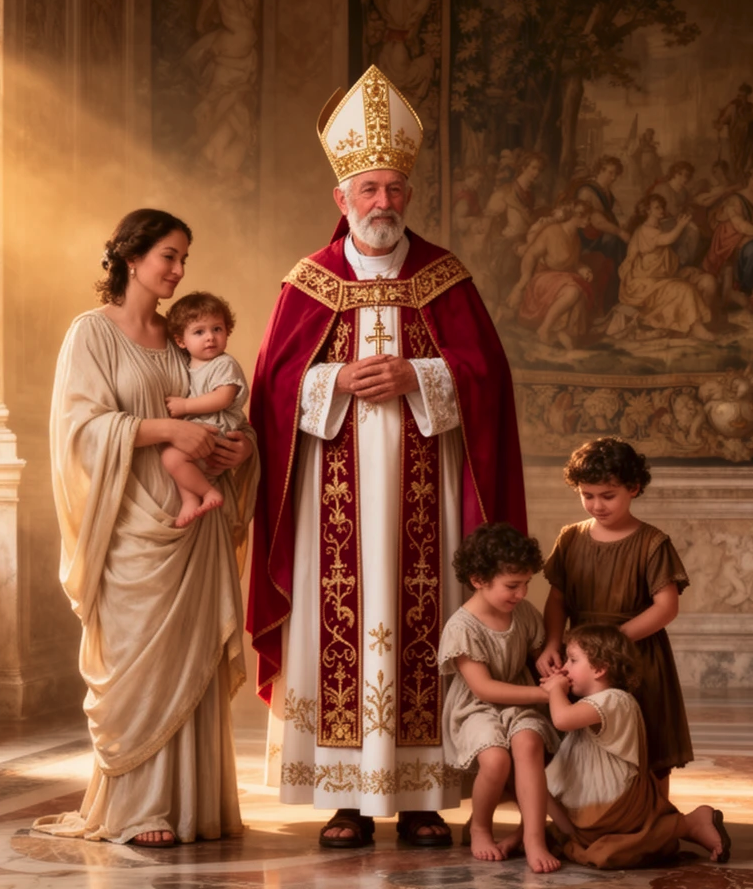
By now you have probably heard, or at least you should have heard, that the Apostle Peter is the main guy that Jesus appointed to be the head of the visible church on earth among Roman Catholics.
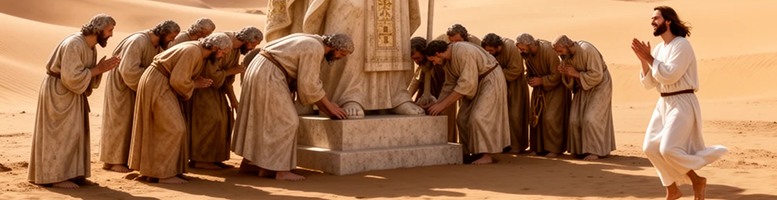
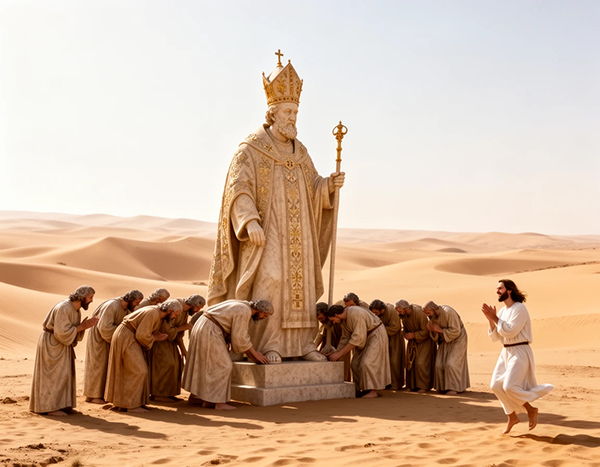
He is the “Vicar of Christ” or chief representative that all the other apostles bowed before, when he was alive and walking the earth, and legislating from the throne.
Several official documents published by the Roman Catholic Church make this clear.
According to the Decrees of the First Vatican Council, written in 1868,
The eternal shepherd and guardian of our souls…set blessed Peter over the rest of the apostles and instituted him the permanent principle of both unities and their visible foundation. Upon strength of this foundation was to be built the eternal temple, and the church whose topmost part reaches heaven was to rise upon the firmness of this foundation.
Later in the same document we read,
It was to Simon alone to whom he [Christ the Lord] had said You shall be called Cephas, that the Lord, after his confession, You are the Christ, the son of the living God, spoke these words: Blessed are you, Simon Bar-Jona, For flesh and blood has not revealed this to you, but my Father who is in heaven, And I tell you, you are Peter, and on this rock I will build my church, and the gates of the underworld shall not prevail against it.
About a hundred years later, the Vatican reiterated Peter’s selection and identity as the “Rock” upon which Jesus allegedly builds his church, when it wrote in its Lumen Gentium (Light of the Nations) document,
The order of bishops, which succeeds to the college of apostles and gives this apostolic body continued existence, is also the subject of supreme and full power over the universal Church, provided we understand this body together with its head the Roman Pontiff and never without this head. This power can be exercised only with the consent of the Roman Pontiff. For our Lord placed Simon alone as the rock and bearer of the keys of the Church, and made him shepherd of the whole flock.
As part of the Catechism of the Catholic Church we are told, “The Lord made Simon alone, who he named Peter, the “rock” of his Church.”
But, when Jesus spoke with Peter and said, “And I tell you, you are Peter, and on this rock I will build my church, and the gates of hell shall not prevail against it,” was he telling Peter that he was the foundation of Christ’s Church? Or, based on the context, was Jesus using some word-play and pointing to something that Peter said that clearly points to the foundation of the Church, to which Peter and ALL the apostles were to eventually be a part?
Before Peter answered Jesus’ question of who the disciples thought Jesus to be, there was some banter going about as to who Jesus was.
The people were divided between John the Baptist, Elijah, Jeremiah, or one of the other prophets.
That is when Jesus asked his disciples, “But who do you say that I am?”
Peter, in his usual spontaneous manner blurted out, “You are the Christ, the Son of the living God.”
This would become the basis for identifying just who the foundation of the Christian Church would be, and it is NOT Peter.
Jesus responded, “Blessed are you, Simon Bar-Jonah! For flesh and blood has not revealed this to you, but my Father who is in heaven.”
Peter’s response is met with approval, because his declaration was not a matter of human invention; it was a divine revelation.
God Almighty had placed on the tongue of Peter the correct identity of just who Jesus is, namely, the Messiah or God’s anointed or appointed Savior of mankind, and that in spite of all the guesswork being done by those intrigued by Jesus’ presence.
Jesus takes Peter’s definite proclamation and adds a prophetic declaration to it, as it relates to his messiahship.
Jesus said, “And I also say to you that you ARE Peter,” just as Peter said “you ARE the Christ.”
What is interesting is that when Peter identified Jesus, he emphatically called him “the Christ.”
When Jesus emphatically identifies Peter, he does not call him “the stone” or “the rock,” for the definite article is missing.
Peter is “a” rock, but not thee rock, in other words.
It is the next clause, though, that Roman Catholics have misinterpreted, which has subsequently led to innumerable absurd conclusions related to other doctrines that they hold dear, but have zero support in terms of “sound doctrine.”
Jesus said, “and upon this rock,” or more literally, “and upon this the rock, I will build the church.”
The demonstrative pronoun, “this,” points directly or specifically at something. What could it be that Jesus is pointing to?
It could not be Peter, otherwise all Jesus had to say was, “and upon YOU I will build my church.” But, Jesus does not say that.
Instead, he uses a demonstrative pronoun, not a personal pronoun.
So, what could it be that God approved and revealed that Peter said, which Jesus is now pointing directly at, as the basis for the Church?
Well, what did Peter just get done saying that led to Jesus’ emphatic response?
It was Peter answering the question about the identity of Jesus: Jesus is the Christ or God’s anointed, as the Son of the living God.
Jesus, as the Christ, is the foundation that he will build his Church, in other words, not a flawed human being, such as Peter!
To make this point even more stark, as the narrative progresses, Jesus shares with his disciples the fact that in a very short while he would go to Jerusalem and suffer at the hands of the religious leaders there, “and be killed, and on the third day be raised.”
Impetuous Peter, whom Roman Catholics believe is THEE foundation of the Church, took Jesus aside and rebuked him for his prophecy. “Far be it from you, Lord!”
Shame on you for saying such a thing, because it just is not true.
Jesus was a liar, in other words, at least according to Peter, and Peter made sure Jesus corrected himself.
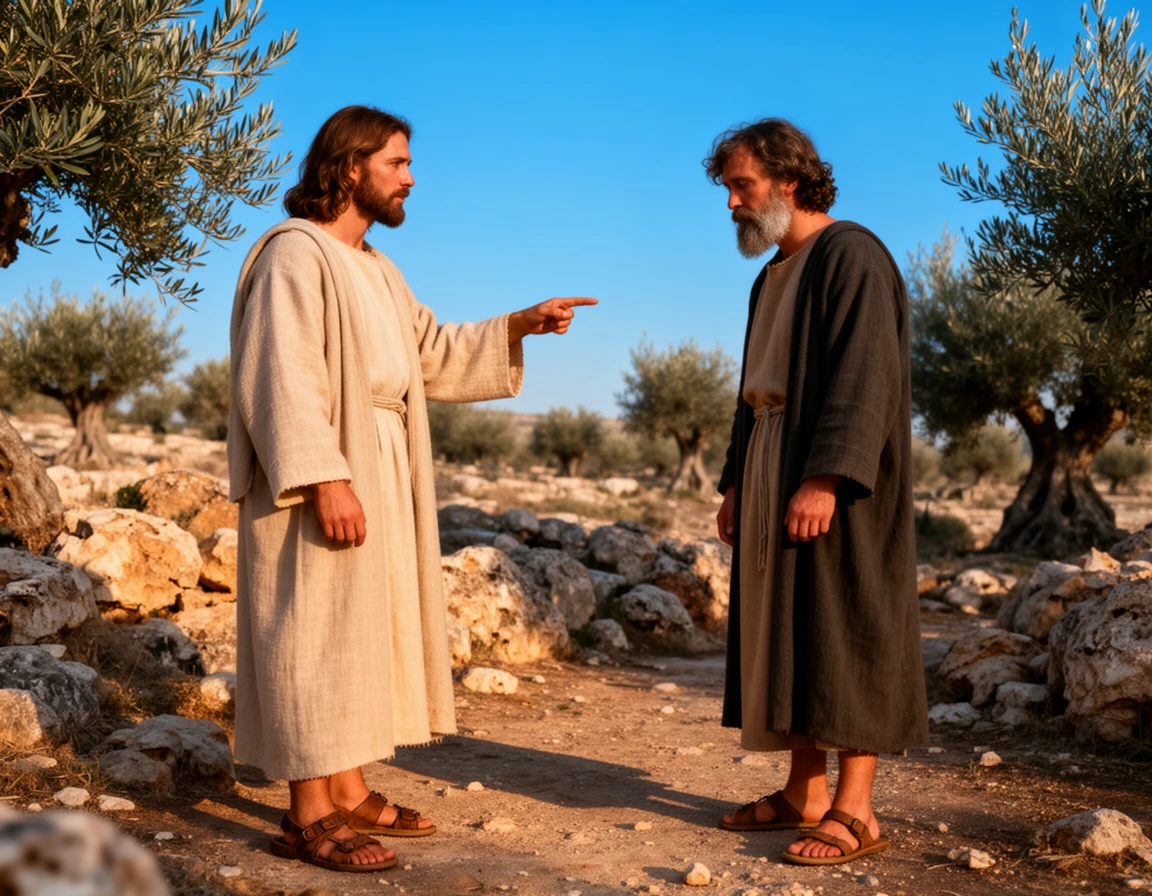
Jesus, though, returned the rebuke by aligning Peter with Satan!
“Get behind me, Satan! You are a hindrance to me. For you are not setting your mind on the things of God, but on the things of man.”
More biblical evidence that “this rock” that Jesus talked about as the foundation of the Church, that the gates of hell would not prevail against, is found in Peter’s own words.
Shortly after Pentecost, Peter and John were going about doing works commensurate with their apostolic callings, preaching the “good news” of Jesus’ resurrection, and healing the sick as evidence of their calling.
The Sadducees, or the liberal element among the Jewish factions of the day, caught wind of Peter and John’s exploits and had them arrested.
They were “greatly annoyed” and wanted them stopped.
When Peter and John were brought before the Jewish elders and scribes, they were asked, “By what power or by what name did you do this?” referring to the healing of lame beggar in Acts, Chapter 3.
Part of Peter’s response was, “This Jesus is the stone that was rejected by you, the builders, which has become the cornerstone. And there is salvation in no one else, for there is no other name under heaven given among men by which we must be saved.”
Not only is Peter emphatic over Jesus as “the stone,” but the “head,” of the very building that the religious element in Jerusalem falsely assumed was someone or something else.
Peter made it crystal clear that salvation is found only in Jesus; not in anything, nor anyone, else.
If the Roman Catholicism were correct in its identifying Peter as the “rock” that Jesus was referring to earlier, here, before the Jewish court, Peter could have easily declared his own authority. But, he didn’t.
He deferred to Jesus.
Later, Peter would write in his first letter “to those who are elect exiles of the Dispersion,” that Jesus was the “stone,” “cornerstone,” and “a rock of offense.”
In fact, the very same Greek term Jesus used in Matthew’s Gospel, that the Roman Catholics have confused with Peter, Peter uses of Jesus by calling him the petra or “rock.”
Elsewhere, the Apostle Paul, who did more to put “meat on the bones,” so to speak, than Peter ever did, when it came to developing both the thought and practice of early Christianity, wrote of ho petras.
Say what? Ho petras? Yes! “The Rock!”
Alluding to the days when Moses was leading the people of Israel out of Egypt, God took care of them by providing both food and drink on their journey to the Promised Land.
Paul wrote,
For I do not want you unaware, brothers, that our fathers were all under the cloud, and all passed through the sea, and all were baptized into Moses in the cloud and in the sea, and all ate the same spiritual food, and all drank the same spiritual drink. For they drank from the spiritual rock that followed them, and the Rock was Christ. Nevertheless, with most of them God was not pleased, for they were overthrown in the wilderness.
Here, Paul positively identifies Jesus Christ as the “Rock” that led God’s people, the “Church,” if you will, in the wilderness.
Nothing has changed since that time, with the exception that now the elect are not confined purely to the Israelites, but to all who are drawn to faith in the Rock, who is Jesus, not Peter.
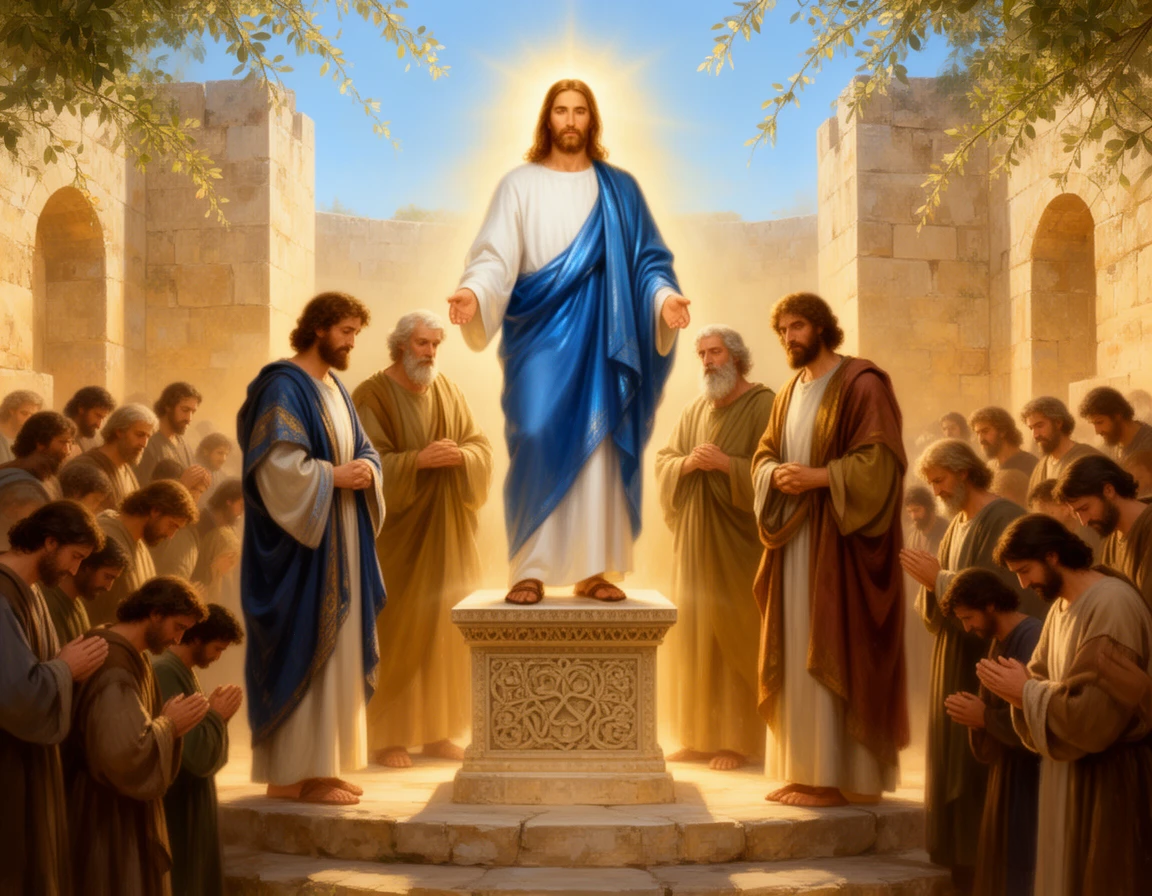
So, in summary, the Roman Catholics have a completely skewed understanding of what Jesus was saying, when he spoke to Peter about his identity.
Jesus was not telling Peter that he was going to be the foundation upon which the church would be erected, which is especially true when, later, Jesus aligned Peter with Satan!
Now, that doesn’t mean that Peter was always influenced by Satan, for obviously Peter did remain in the church, made proclamations as to who Jesus was, did some miracles to prove his apostleship, established some churches, and wrote some inspired Scripture.
But, in no way, given the context, did Jesus ever say to Peter, “You are the rock upon which I will build my Church.”
No. Instead, Jesus lauded Peter’s statement about identifying Jesus as the Christ, the Son of the Living God, as the basis upon which the Church would be founded.
Subsequent statements from both Peter and Paul would support such a conclusion.
The only reason the gates of hell, or why any demonic attack upon Christ’s Church, will never prevail against biblical Christianity is because Christ is its basis.
It is only when someone or something other than Christ becomes the focal point of spiritual life, godly authority, or doctrinal teaching that that “church” is no longer representative of biblical Christianity.
Roman Catholicism, by exalting Peter to a rank that Jesus never intended—since Peter is not the Christ, the Son of the Living God, but Jesus is—clearly puts Roman Catholicism at odds with both biblical Christianity and Christ himself.
Therefore, Roman Catholicism, although it likes to be thought of as THEE Church that Christ founded, is nothing more than another caricature of Christianity, since it sees impetuous Peter as its “rock,” rather than the biblical Jesus as “THEE Rock” by God’s anointing.




Be the first to comment on "Papa Peter is not the Petra"